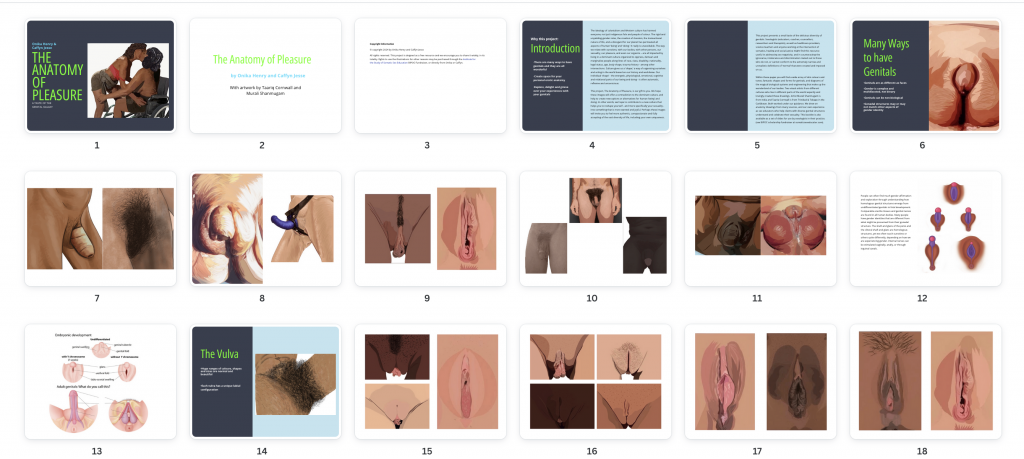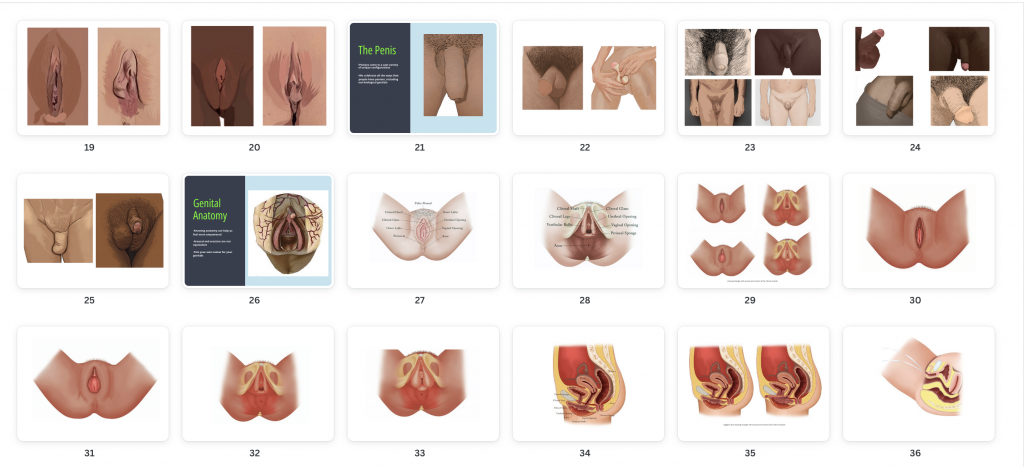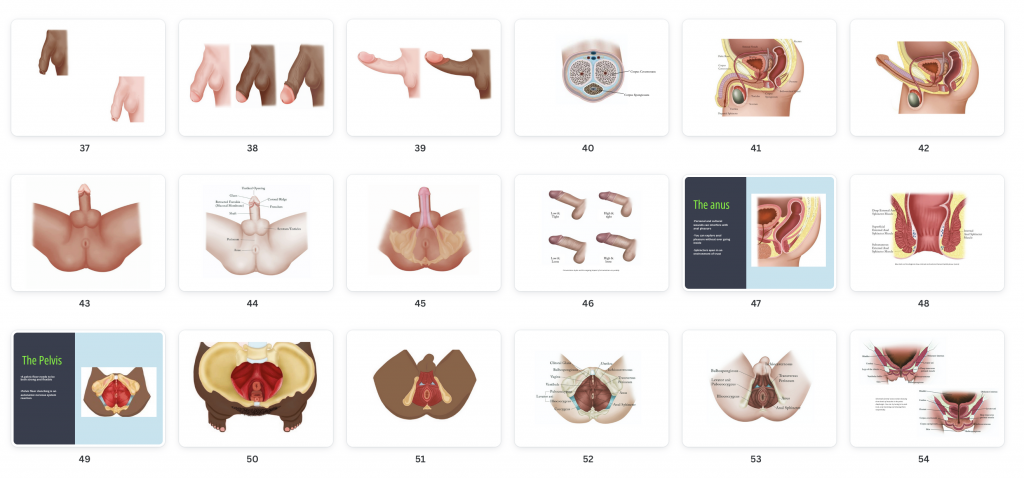

The Anatomy of Pleasure is a groundbreaking visual resource that celebrates the rich diversity of human genital anatomy. Created by somatic sex educators Onika Henry and Caffyn Jesse with a team of international artists, this project offers inclusive and anatomically informed illustrations that challenge narrow ideas of “normal” bodies and open space for curiosity, compassion, and joy in learning about sexual anatomy.
Drawing on decades of experience supporting clients in understanding, healing, and celebrating their sexuality, the authors describe this book as “a small taste of the delicious diversity of genitals.” Within its pages, readers encounter a wide range of genital structures, skin tones, shapes, and configurations—honoring the truth that genitals are as different as faces.
The illustrations celebrate the many ways bodies exist and express themselves. Intersex and transgender genitals are included, and the project emphasizes that gonadal structure does not determine gender identity. Non-biological genitals are also recognized as part of the living landscape of human sexuality.
Alongside this diversity of forms, anatomical diagrams explore the biological systems that support pleasure: the clitoral complex, penile anatomy, pelvic musculature, and the intricate networks of nerves that shape sexual response. These images help readers understand the body not only as a structure, but as a dynamic and responsive system capable of sensation, arousal, and connection.
The artwork was created by two international artists—Murali Shanmugam from India and Taariq Cornwall from Trinidad and Tobago—working in collaboration with the authors. Together they drew on medical illustrations, lived experience, existing resources, and years of sex education practice to produce images that are both accurate and deeply human.
At its heart, The Anatomy of Pleasure is more than an anatomy resource. It is an invitation to curiosity, compassion, and celebration. In a culture shaped by shame, narrow norms, and unrealistic expectations about bodies, these images open space for a different relationship with ourselves and each other.
As Henry and Jesse write:
“We hope these images will invite you to feel more authentic, compassionate and fully accepting of the vast diversity of life, including your own uniqueness.”
For educators, therapists, healthcare providers, and anyone interested in the science and joy of human sexuality, The Anatomy of Pleasure offers a rare and valuable resource—one that makes room for the astonishing diversity of bodies and pleasures that exist in the world.
The images in this book can also be purchased as set of slides, for use by sexologists in their practice HERE.